
Creative Camera Rigs for Unusual Angles in Film
Every filmmaker knows the power of a well-chosen angle. A single shift in perspective can transform a flat scene into something memorable, revealing emotion or tension that dialogue alone cannot carry. Yet capturing those unusual angles often requires more than just a steady hand and a good eye. Creative camera rigs make it possible to place a lens where human bodies cannot go, to move in ways that feel unnatural, and to frame shots that break the rules of conventional cinematography. Whether you are working on a low-budget short or a polished commercial, building or borrowing the right rig opens up a world of storytelling possibilities.
Why Unusual Angles Matter in Visual Storytelling
Before diving into specific rigs, it helps to understand why unusual angles have such an impact. The Dutch angle, also known as the Dutch tilt, was first pioneered in the 1920 film The Cabinet of Dr. Caligari. That tilted horizon immediately signals unease, instability, or a distorted reality. A high angle shot, by contrast, conveys vulnerability or powerlessness in a character, as the camera looks down from above. Negative space shots place a character in a big empty space to convey isolation. Each of these angles relies on the camera being positioned somewhere unexpected, and that is where the rig comes into play. The rig is the bridge between the idea and the image.
Building a Dutch Angle Rig Without Breaking the Bank
The Dutch angle is one of the most straightforward effects to achieve, but doing it consistently across a scene requires a stable mounting solution. A simple tripod with a fluid head can be tilted sideways, but the resulting shot often feels unsteady. A dedicated camera cage with an adjustable arm, such as a SmallRig Magic Arm, can be used to get creative and different camera angles for up-close shots. The Magic Arm locks into position at nearly any angle, making it ideal for attaching a camera to a table edge, a railing, or even a doorframe. Once secured, you can tilt the camera to that familiar Dutch tilt and roll. For a more traditional approach, a heavy-duty ball head on a tripod offers full freedom of rotation, though you will need to monitor the horizon line carefully to keep the angle consistent across multiple takes.
DSLR Helmet Rigs for First-Person Perspectives
First-person point-of-view shots put the audience directly inside a character's experience. DSLR helmet rigs can be used to shoot POV shots from a character's eye level. This rig typically involves a lightweight camera (a DSLR or mirrorless body) mounted on a motorcycle helmet or a hard hat using a combination of clamps, baseplates, and counterweights. The performer must wear the helmet and move naturally, so the camera needs to be balanced to avoid neck strain. A helmet mount works especially well for walking scenes, climbing sequences, or any moment where a conventional handheld shot would feel too polished. It adds a raw, documentary-like quality that pulls viewers into the action.
Safety and Stability Considerations
Whenever you mount a camera to a moving person, safety comes first. The rig must be securely fastened so nothing shifts during movement. Use redundant straps and a secondary tether in case a clamp loosens. Test the rig in a controlled environment before the actual shoot. A helmet rig places the camera close to the performer's face, so choose a wide-angle lens to avoid a claustrophobic field of view. The goal is to capture the scene from the character's eyes, not from their chin or forehead.
Tracking Shots with a Dolly or Skateboard Rig
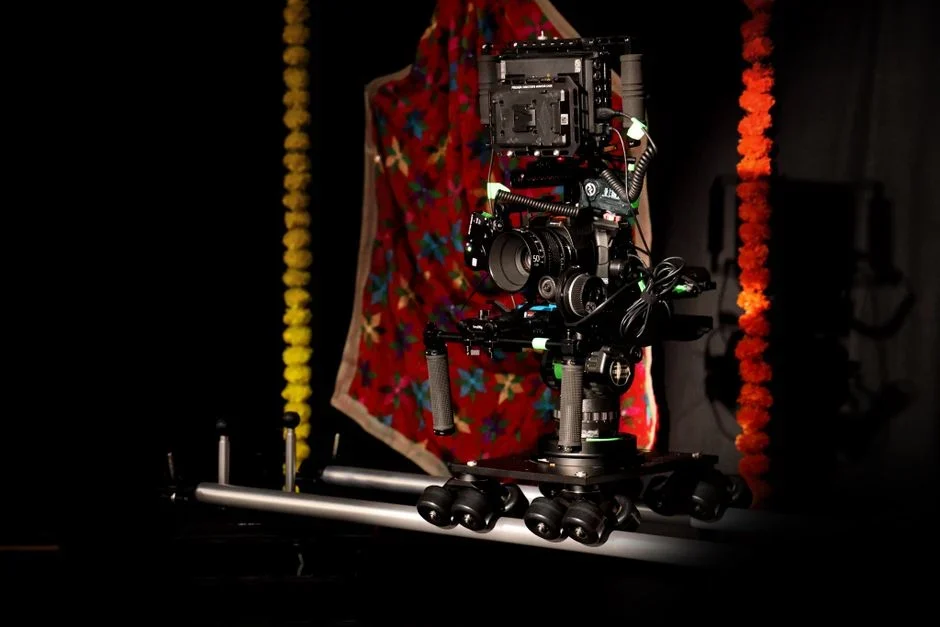
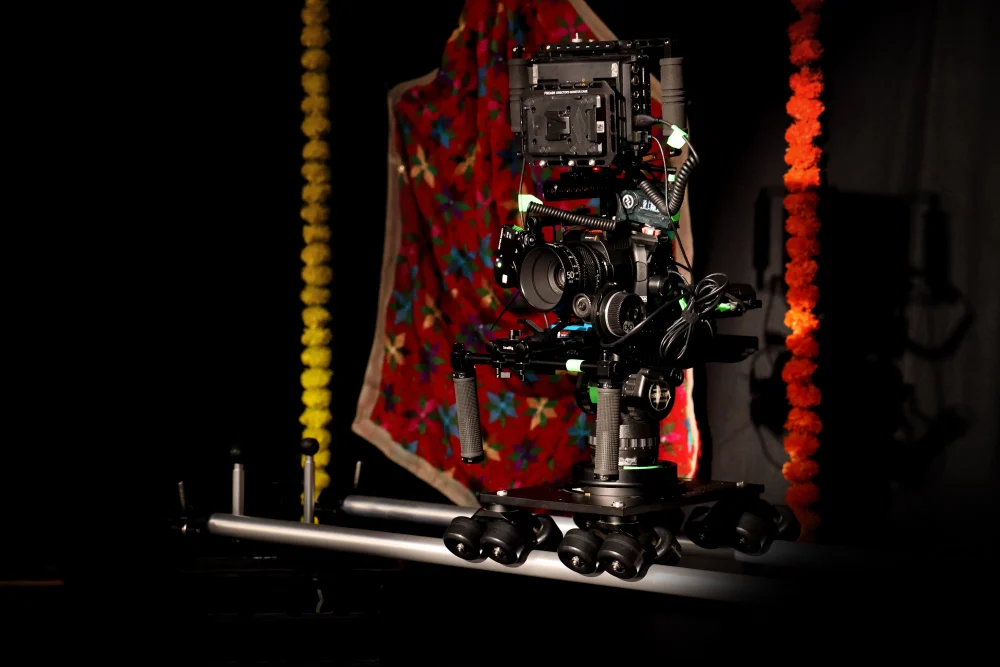
Smooth tracking shots following a character are achieved with a dolly. Traditional camera dollies run on straight or curved track and produce buttery motion, but they are heavy and require setup time. For unusual angles, a smaller dolly or even a skateboard rig can get the camera low to the ground or into tight corners. A low-profile dolly platform with pneumatic wheels allows the camera operator to roll alongside an actor at hip height, creating a dynamic lateral move. For a more aggressive POV, mount the camera on a longboard and push it across the floor while the actor walks beside it. This technique works well for gritty, handheld-style tracking that still has a controlled path.
High Angle Shots from Overhead Rigs
To achieve a high angle shot that conveys vulnerability or powerlessness, the camera needs to look downward. A typical solution is a crane or jib arm, but those can be expensive and require a large crew. A more accessible rig uses a lightweight C-stand with a boom arm. Attach the camera to the boom using a Magic Arm or a small ball head, then counterbalance the opposite end with sandbags. This gives you an overhead perspective that can be repositioned quickly. For extreme high angles, consider a monopod that extends above head height. One operator holds the base while another triggers the camera remotely. The resulting shot gives the audience a sense of looking down on a character, exactly as the high angle convention intends.
Negative Space and Odd Framing Techniques
Negative space and odd framing are among five camera angles you are probably not using but should. Negative space shots place a character in a big empty space to convey isolation. To capture this, the rig often needs to be far from the subject, using a long lens or a wide-angle lens with a large area of emptiness around the actor. A simple tripod works for static shots, but if you want a slow push into that emptiness, a slider on a low tripod can creep forward while the subject remains tiny in the frame. Odd framing means deliberately breaking the rule of thirds, placing the subject near the edge of the frame or partially out of view. A clamp rig attached to a doorframe can hold the camera at an unconventional height, such as knee level or ceiling level, to achieve that disorienting composition.
GoPro Bottle Mounts and Other DIY Perspectives
Not every creative camera rig has to be professional equipment. Mounting a GoPro on a bottle of Schnaps is an example of a creative or unusual perspective. This type of rig places the camera inside a prop that a character holds or interacts with. The viewer sees the world from the object's point of view, creating an almost surreal connection to the scene. To pull this off, use a small adhesive mount or a strip of double-sided tape on a flat part of the object. For a spinning effect, attach the GoPro to a bicycle wheel or a lazy Susan and let it rotate while the actor moves. These low-cost experiments can yield footage that no purpose-built rig could replicate.
Learning from Experienced Filmmakers
Jay P. Morgan, creator of The Slanted Lens, has a tutorial showing how to pull off unique camera angles with simple steps. His approach often involves looking at everyday objects as potential camera supports, a ladder, a trash can, a stack of books. The key is to stabilize the camera with whatever is available and then frame the shot around the resulting angle. Online communities also share real-world experiments. On Reddit, users post their own rig setups, from PVC pipe shoulder mounts to custommade car camera mounts. While not every idea is production-ready, the collective creativity of the filmmaking community constantly pushes what is possible. If you have a specific shot in mind, searching for that combination of subject and rig will likely turn up a solution someone else has tried.
Choosing the Right Gear for Your Rig
Building a creative camera rig does not require owning every piece of equipment. A peer-to-peer marketplace like Lens Latitude connects you with local gear owners in Canada, so you can rent exactly what you need for a single weekend shoot. Whether it is a SmallRig Magic Arm, a DSLR cage, a helmet mount kit, or a fluid head dolly, renting keeps your options open without a large upfront investment. The platform also allows you to list your own gear for rent, turning idle equipment into income between your own projects. By accessing gear only when you need it, you can experiment with different rigs until you find the one that best achieves your unusual angle.
Final Thoughts on Creative Camera Rigs for Unusual Angles
The best camera rigs are the ones that disappear into the scene, letting the angle speak for itself. Whether you tilt the horizon with a Magic Arm, strap a camera to a helmet, or mount a GoPro to a bottle, the goal is always the same: to give the audience a perspective they have not seen a hundred times before. Start with the ideas in this article, then adapt them to your own story. The gear is a tool, but it is your imagination that makes the angle unusual. Renting gear from a community marketplace lets you test those ideas without a long-term commitment, so you can focus on what matters, capturing the shot that makes your film stand out.
Frequently Asked Questions
Can I build a creative camera rig with DIY materials?
Yes. Many filmmakers construct rigs from wood, PVC pipe, clamps, and even household furniture. The key is ensuring the camera is securely mounted so it does not fall. For unpredictable angles like a bottle mount, use strong adhesives or straps. DIY rigs are a great way to prototype an idea before investing in professional gear.
How do I prevent camera shake in unusual angle shots?
Stabilization depends on the rig. For a helmet mount, add counterweights to balance the camera. For a dolly shot, use a fluid head and smooth track. Any rig that moves should be tested at full speed before the actual take. If a shot still shakes, a lightweight gimbal can be adapted to most rigs.
What is the best lens for a Dutch angle shot?
The lens choice depends on the scene. A wide-angle lens emphasizes the tilted horizon and makes the space feel larger, which heightens disorientation. A telephoto lens compresses the background and keeps the tilt subtle. Try both and pick the one that matches the emotional tone of your scene.
How can I achieve a high angle shot without a crane?
Use a monopod extended fully overhead or mount the camera on a C-stand boom arm. You can also place the camera on a tripod on a table or ladder, as long as everything is stable. Shoot using a remote trigger or a smartphone app so you do not have to touch the camera during the take.
Where can I rent unusual camera rigs in Canada?
Lens Latitude is a peer-to-peer marketplace that connects renters with local gear owners across Canada, particularly in the Vancouver area. You can find items like Magic Arms, helmet mounts, dollies, and specialty clamps. The platform also offers delivery, making it convenient to try a new rig for a single project.